
Warehousing (WMS) · Warehousing and 3PL services
Manage your warehousing service in the same system as your transport
The Kargon™ Warehouse Module manages the full operation from goods receipt to dispatch, customer-owned consigned stock and monthly billing across contract warehousing (3PL), customs bonded warehouses, cross-dock, e-commerce and special-condition storage, in full regulatory compliance.
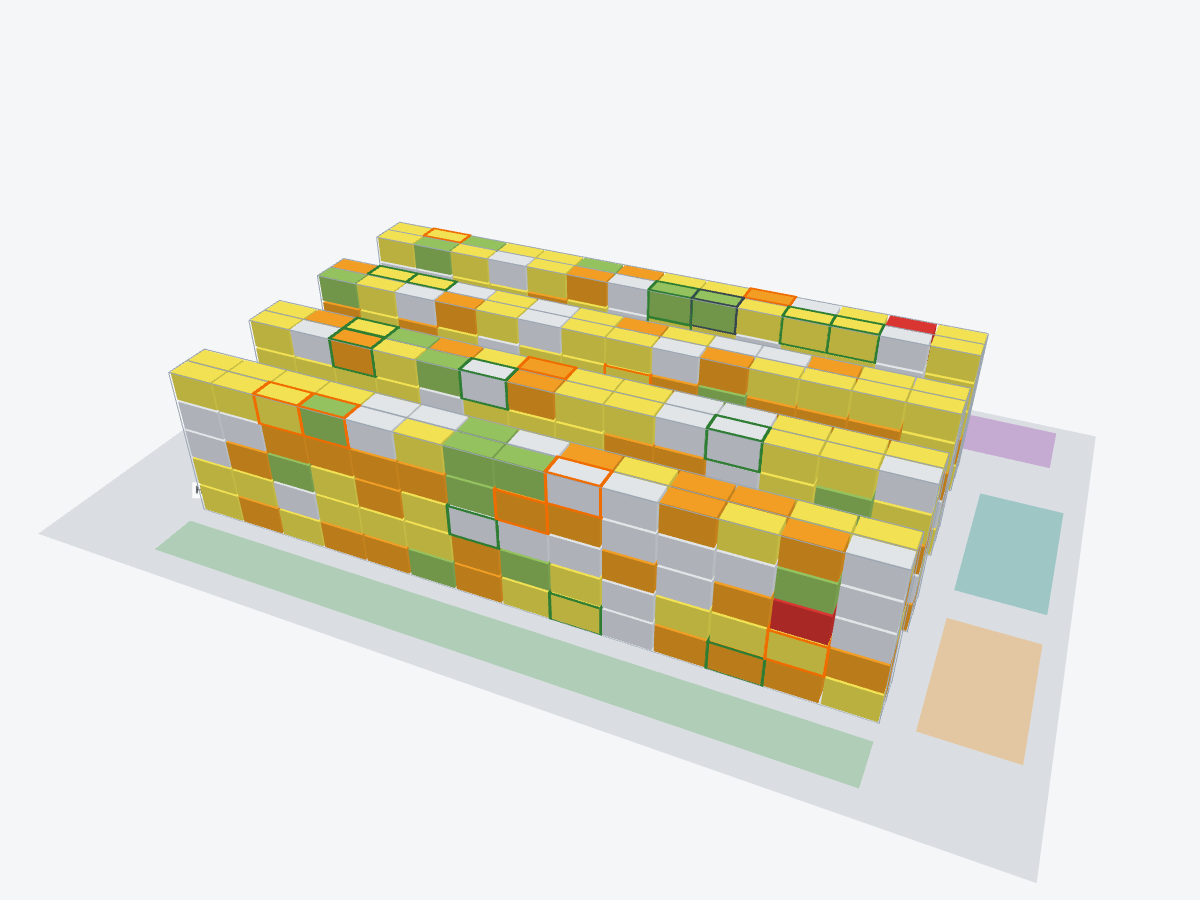
Drag to rotate, scroll to zoom, click a bin
Control at goods receipt
Incoming waybills are compared against the ASN; variances and damage go into a report, non-conforming goods into quarantine.
Addressed, segregated stock
Aisle-rack-level-bin addressing; customer-owned consigned stock, FIFO / FEFO / LIFO.
Compliant dispatch
Two e-Waybill scenarios at warehouse dispatch; transport waybill and instruction record.
Automatic billing
Storage, handling and value-added services flow into monthly billing, and from there into an e-Invoice.
Who is it for?
For logistics companies offering third-party warehousing
The Road Transport Regulation (KTY) defines a logistics operator as a party that, alongside transport, takes delivery of customer-owned goods and provides storage, stacking, packing, sorting, labeling, order planning and distribution services (KTY art. 3). The Kargon™ Warehouse Module manages all of these services in the same system as transport operations; stock remains the property of the goods owner and never enters the warehouse operator's inventory.
What do you get?
- Advance shipping notice (ASN) and goods receipt
- Location addressing; lot, serial, expiry date, FEFO
- Picking, packing, dispatch and e-Waybill
- Monthly warehouse billing → e-Invoice
Product tour
Meet the Warehousing (WMS) screens
The screens below walk through a real workflow step by step. Click any image to enlarge it.
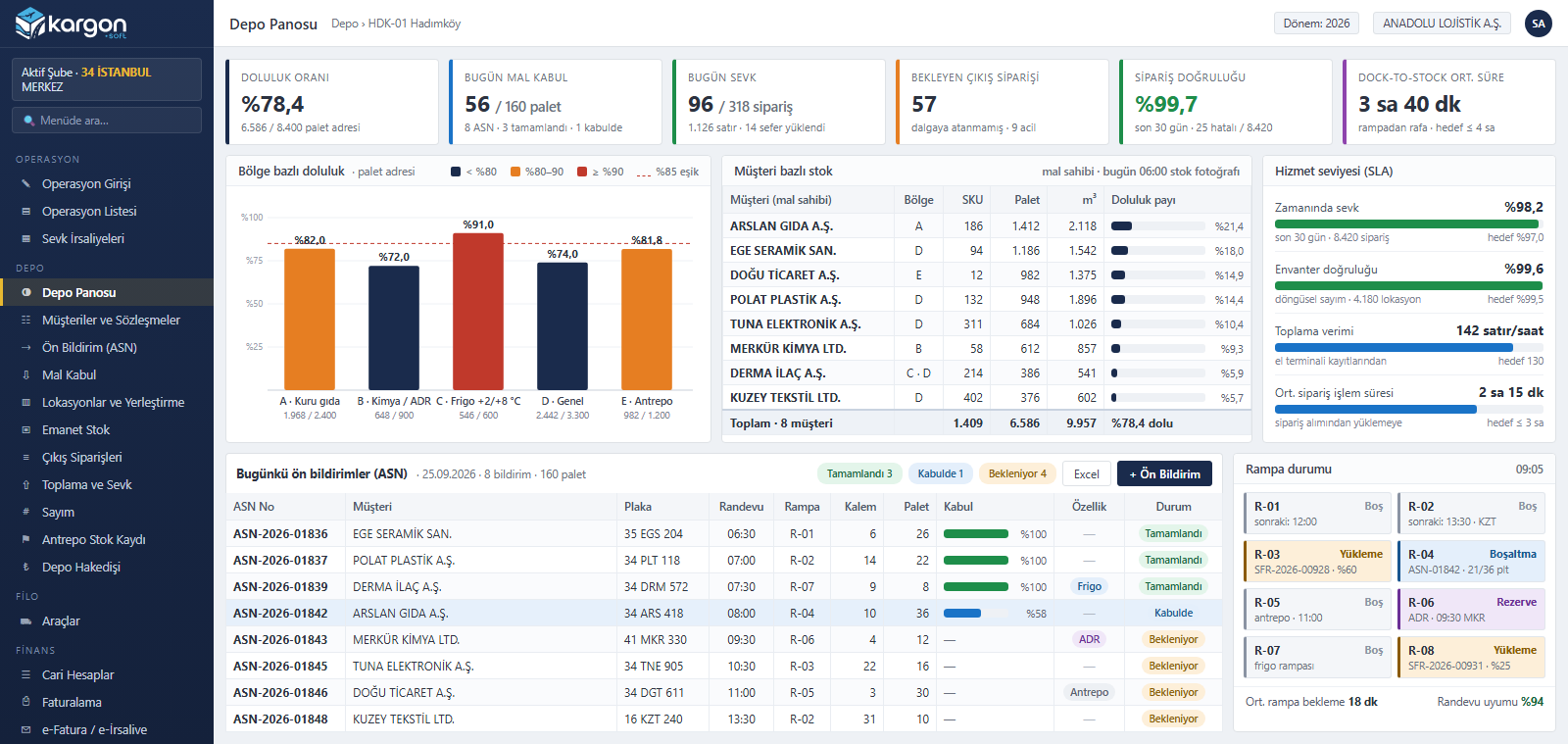
Warehouse Dashboard and Performance Indicators
Occupancy rate, today's goods receipt and dispatch counts, and pending outbound orders on the first screen. Occupancy by zone (ambient, ADR, reefer, bonded), pallet and m³ stock per customer, plus indicators such as order accuracy, dock-to-stock, on-time dispatch and picking productivity are all tracked on the same dashboard.
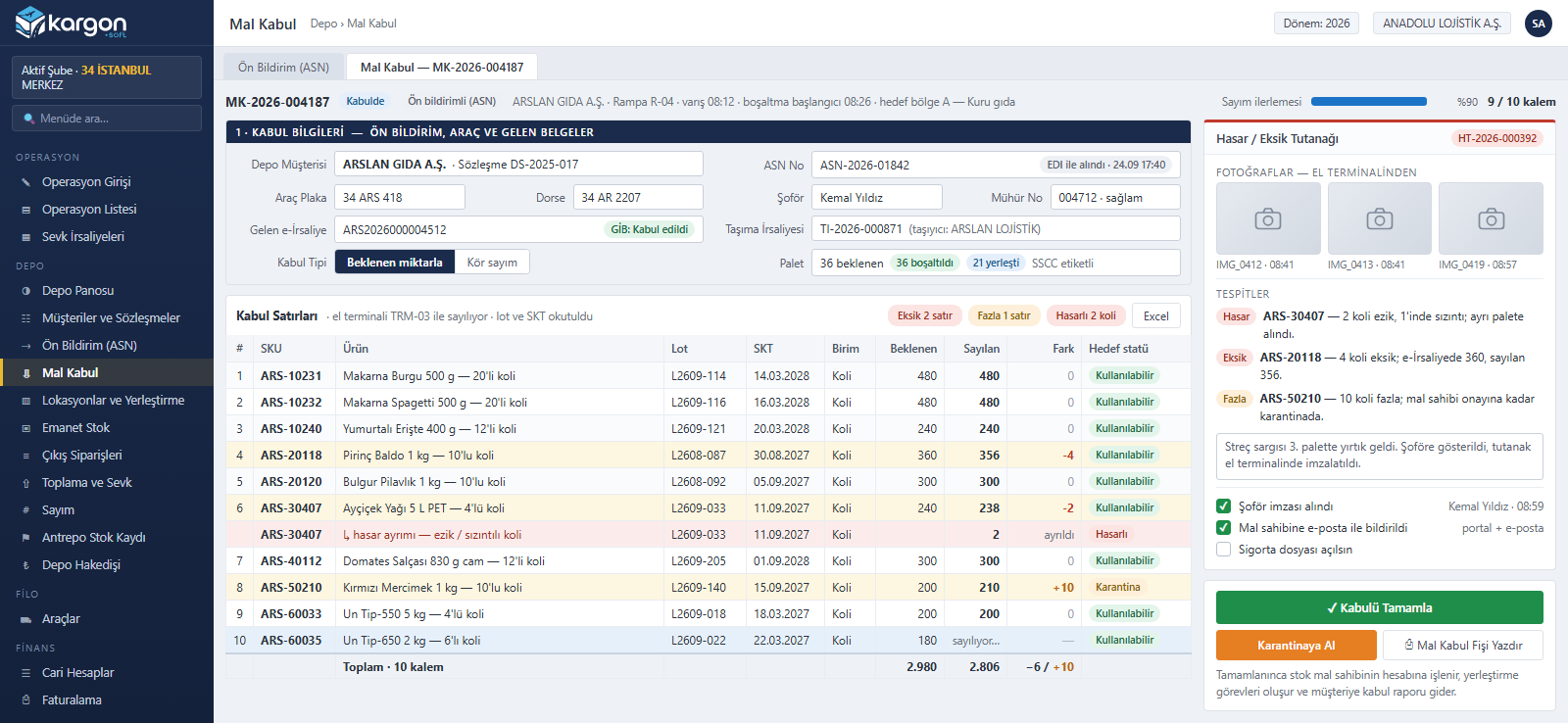
Advance Shipping Notice (ASN) and Goods Receipt
The product, quantity, lot and expiry date from the advance shipping notice are compared line by line against the load coming off the truck. Choose blind count or receipt against expected quantity; incoming e-Waybills and transport waybills are checked and archived. Variances and damage are linked to a report with photos, and non-conforming goods go straight to quarantine.
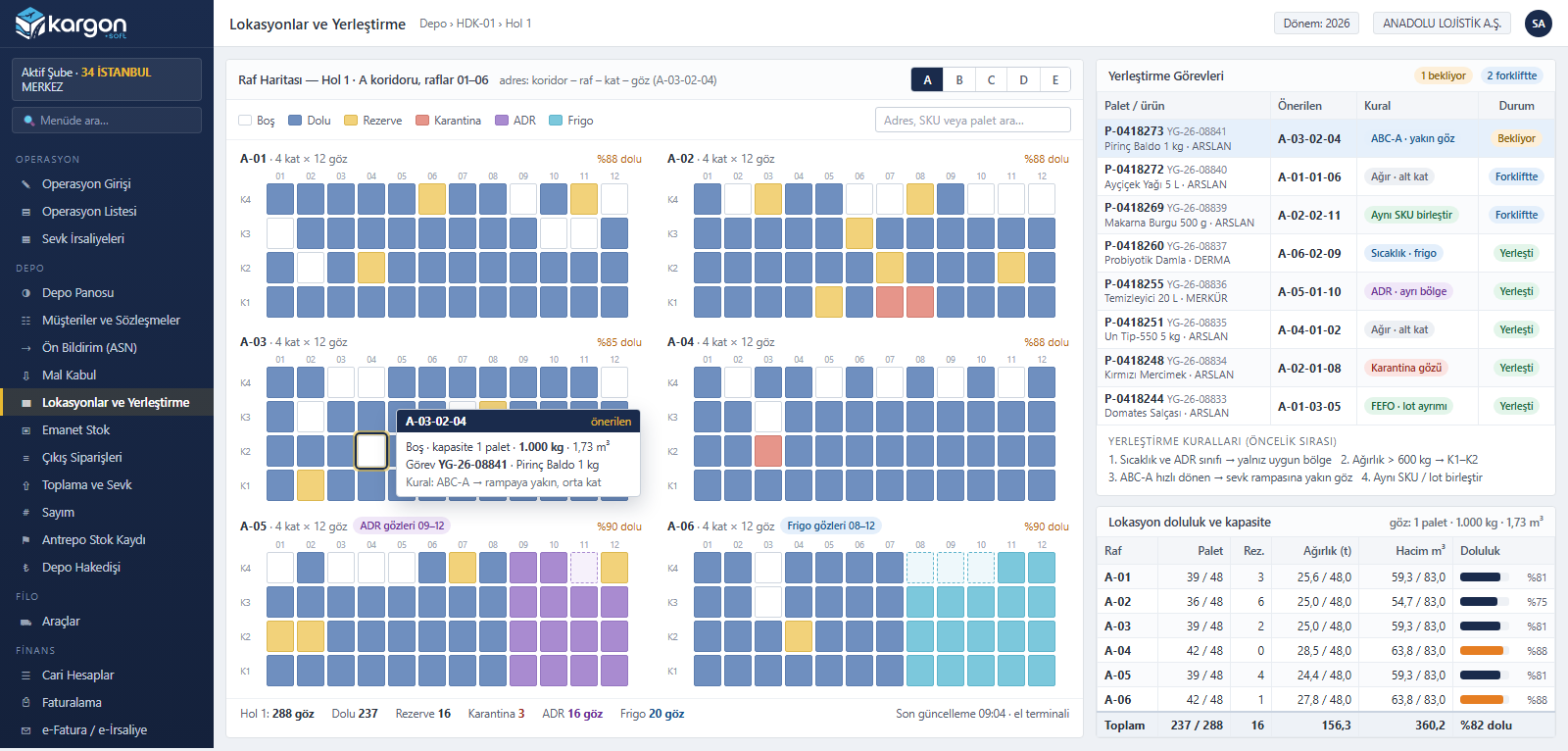
Location Addressing and Putaway
The warehouse is mapped with aisle-rack-level-bin addresses; each bin's occupancy, reservations and quarantine status are color-coded. Putaway tasks suggest locations based on ABC analysis, weight, temperature and ADR segregation rules; pallet, kg and m³ capacities are never exceeded.
Customer-Owned Consigned Stock
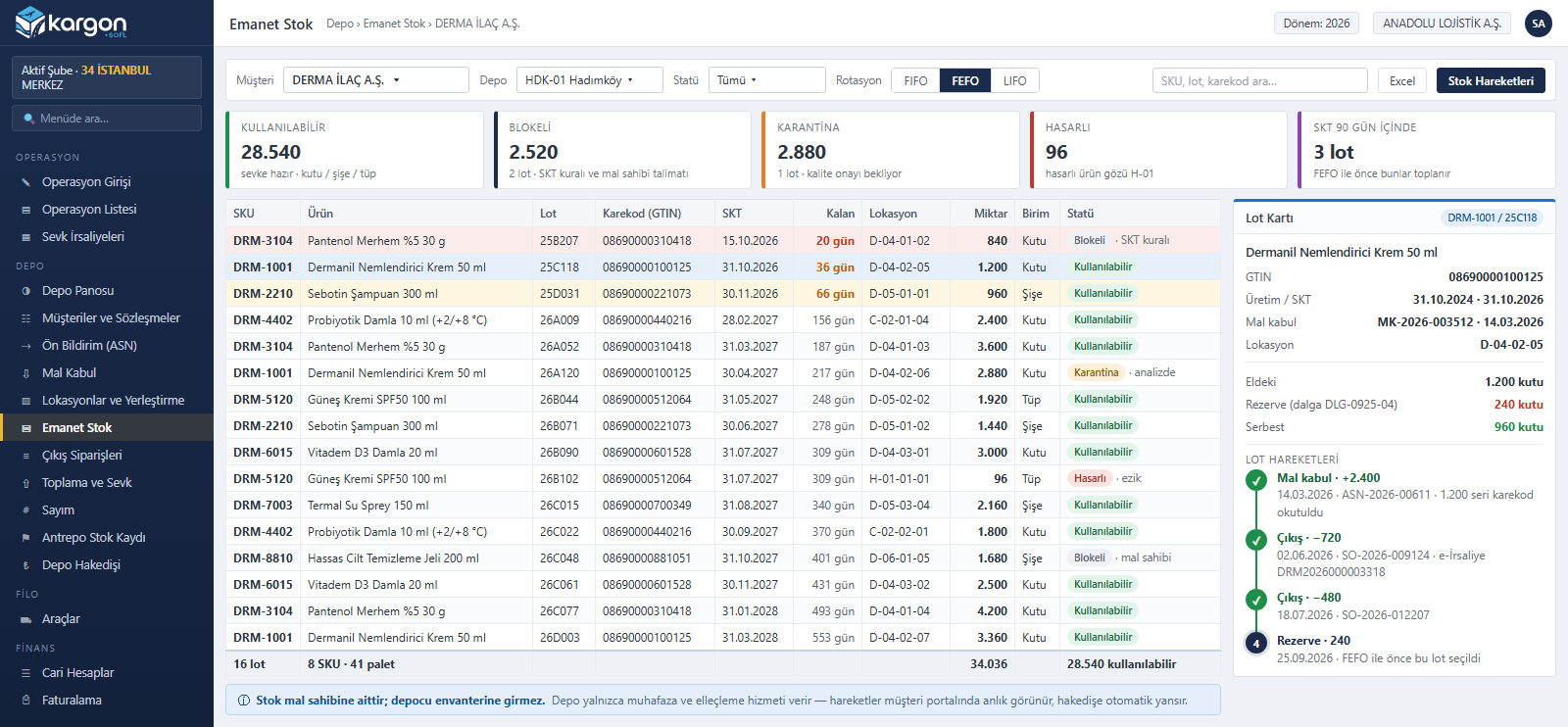
Each customer's stock is kept separately and commingling is controlled. Lot, serial number / data matrix and expiry date are tracked line by line; with FEFO rotation, items nearing expiry come first. Available, blocked, quarantine and damaged statuses are kept apart.
Picking, Packing and Dispatch
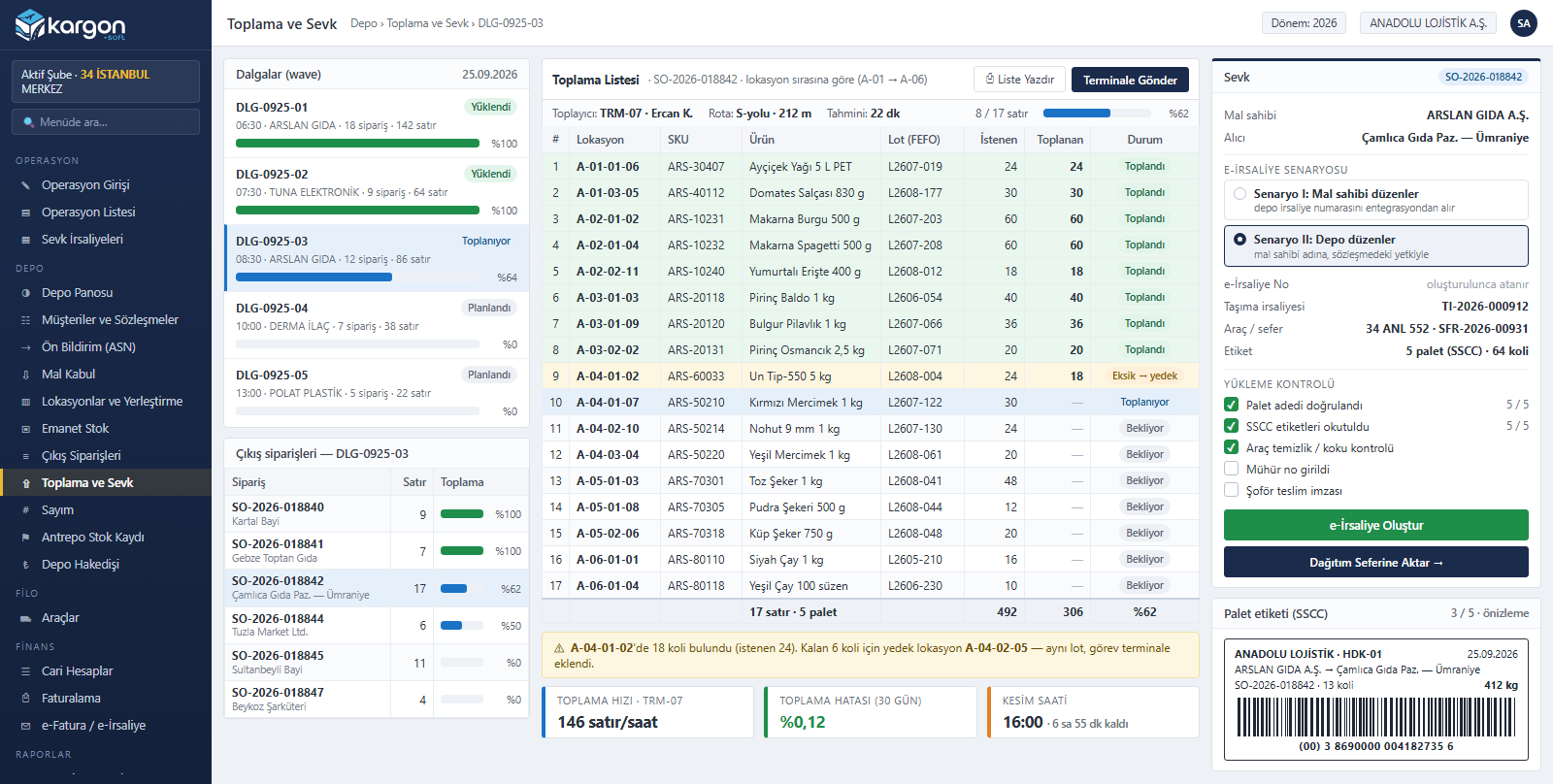
Outbound orders become wave, batch or zone pick lists, sequenced by location. Carton and pallet labels are printed and loading is verified; dispatch is completed by selecting e-Waybill Scenario I or II and transferred to a distribution trip in one click.
Cycle and Periodic Counts
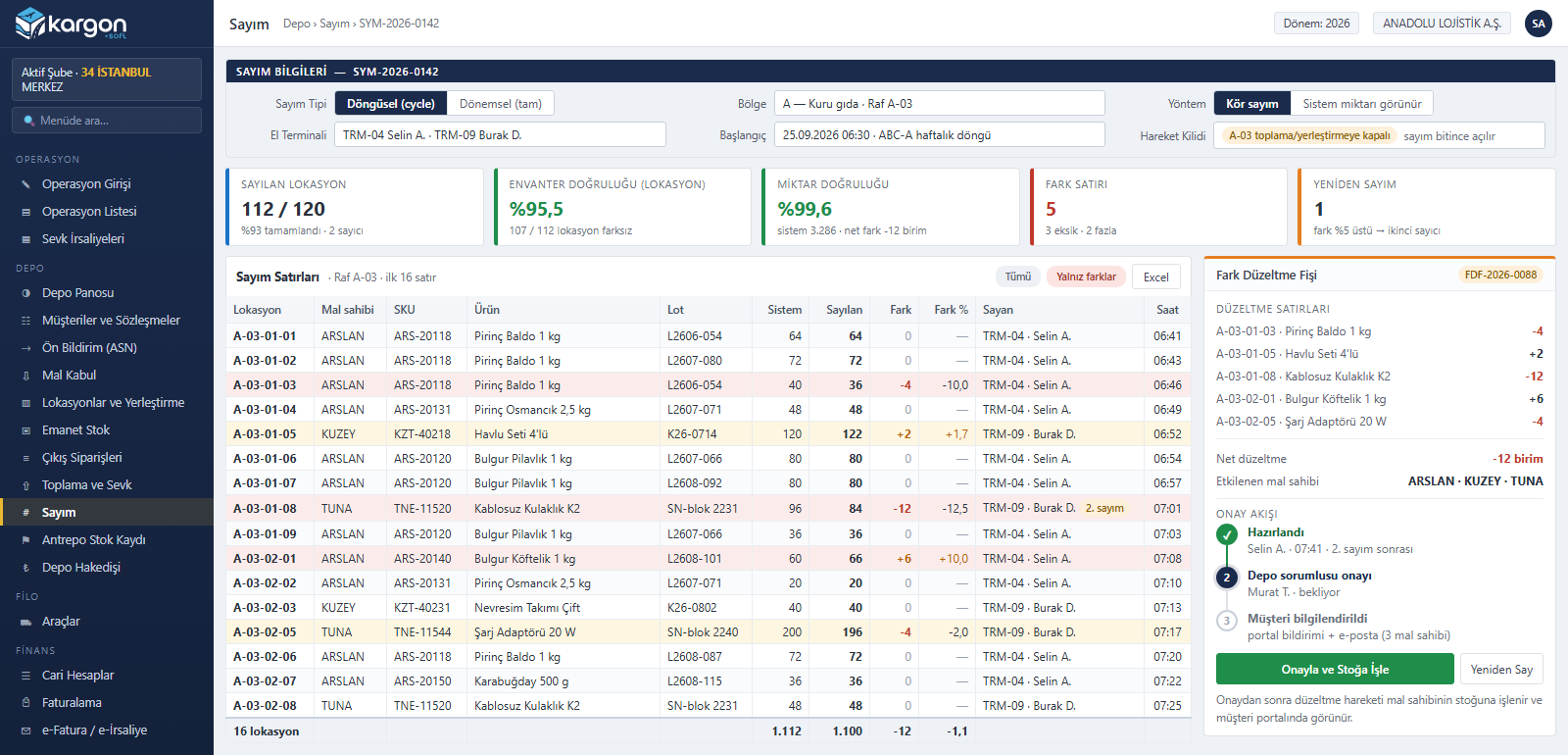
In counts made with handheld terminals, system and counted quantities are compared by location and lot. Variance lines become a variance adjustment slip and go through an approval workflow; the inventory accuracy rate updates with every count.
Monthly Warehouse Billing and e-Invoice
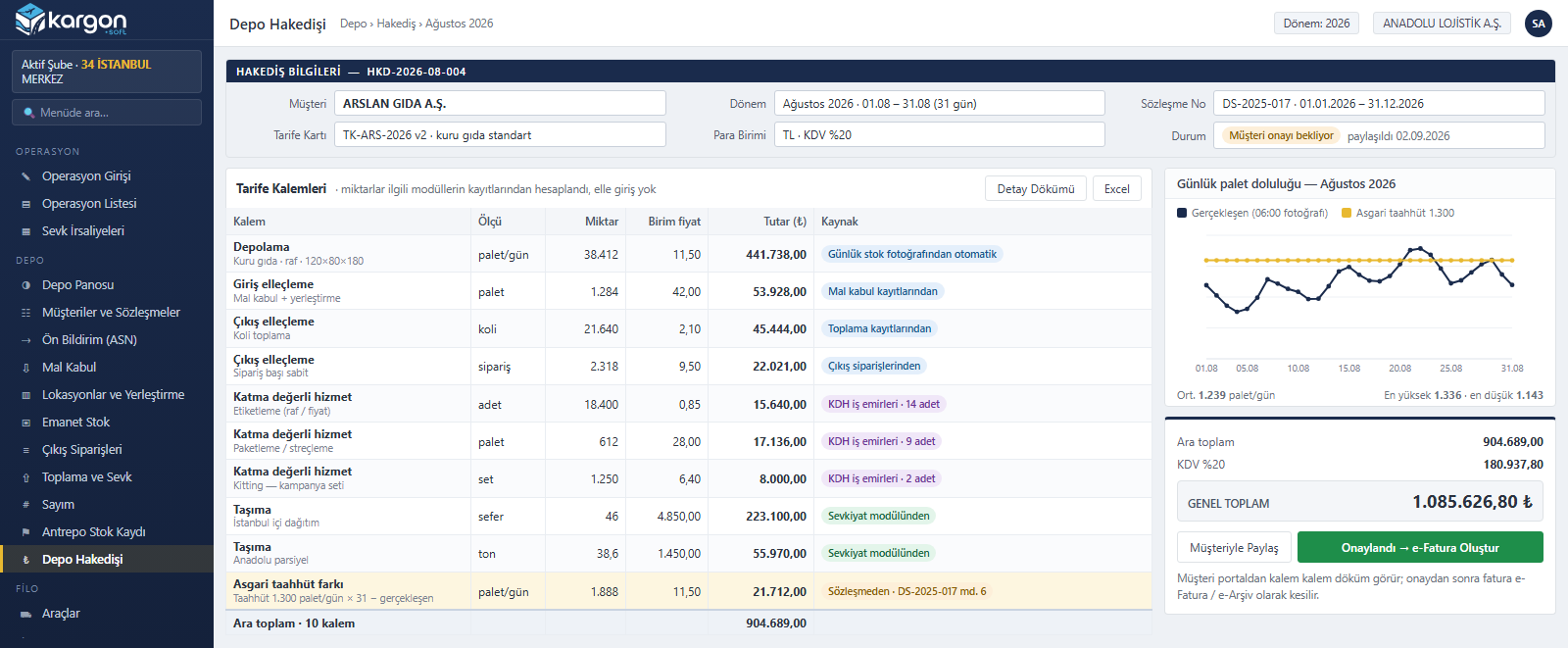
Storage charges are calculated automatically from the daily stock snapshot, inbound and outbound handling from goods receipt and dispatch records, and transport from the shipments module; any minimum commitment shortfall appears as a separate line. The billing statement is shared with the customer and, once approved, an e-Invoice / e-Archive invoice is created in one click.
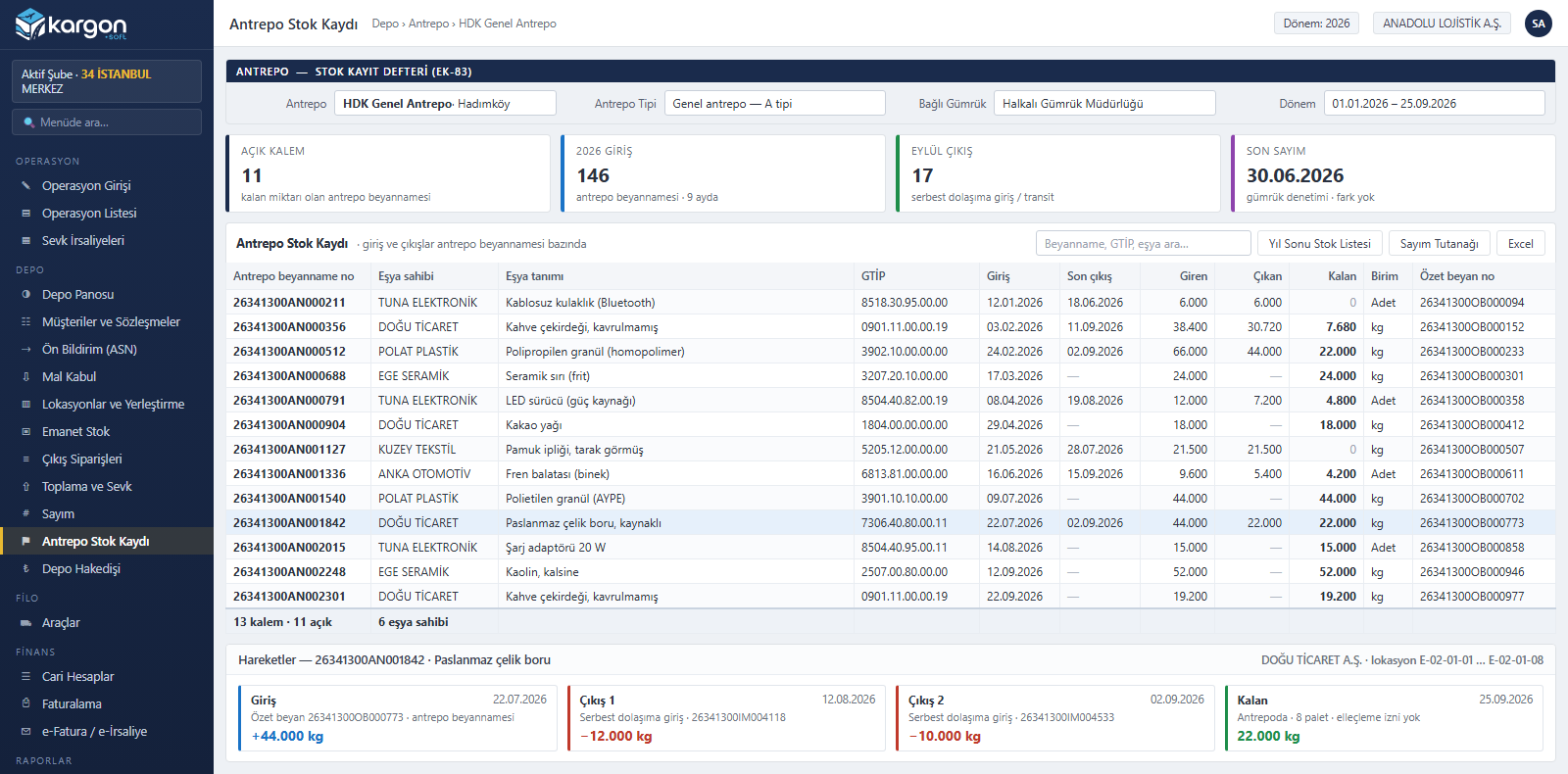
Bonded Warehouse Stock Record (Annex 83)
In customs bonded warehouses, goods are recorded on entry: the warehouse declaration number, goods description, HS code, entry and exit dates and remaining quantity are kept on a single card. The year-end stock list and count report are generated from here.
3.1 Warehouse
Warehousing service models
The Road Transport Regulation (KTY) defines a logistics operator as a party that, alongside transport, takes delivery of customer-owned goods and provides storage, stacking, packing, sorting, labeling, order planning and distribution services (KTY art. 3). The Kargon™ Warehouse Module manages all of these services in the same system as transport operations.
Contract warehouse (3PL)
- Customer-owned consigned goods
- Charges per pallet, m² or m³
- Inbound / outbound handling
- Segregated stock per customer
- Legal basis: Turkish Code of Obligations provisions on safekeeping and the warehousing business
Customs bonded warehouse
- Public bonded warehouse: types A, B, F
- Private bonded warehouse: types C, D, E
- Stock records per Annex 83
- Link to customs declaration and release report
- Year-end stock list and count
Cross-dock and transfer
- From linehaul vehicle to distribution vehicle without entering storage
- Direct connection with LTL transport
- Integrated with the consignment slip and consolidated waybill flow
- Short-term buffer stock
E-commerce and distribution
- Order-based picking and packing
- Carton labels, kitting
- Returns receipt
- Matching with intra-city distribution trips
- Order and stock tracking via the customer portal
Special-condition warehouse
- Temperature-controlled (reefer) areas
- ADR dangerous goods segregation, UN number
- Food: lot and expiry date, FEFO
- Pharmaceuticals: serial number and data matrix tracking
- Quarantine and blocked statuses
3.2 Regulation
Regulatory framework for warehousing services
Warehousing is a service where transport, safekeeping, customs, tax and sector-specific regulations intersect. Kargon™ meets each requirement with a record or a control.
| Topic | Legal basis | What does it require? | How Kargon™ handles it |
|---|---|---|---|
| Logistics operations | Road Transport Regulation (KTY) art. 3, art. 6/9, art. 14/9 — L1 (domestic), L2 (domestic + international) authorization certificate | Logistics services including warehousing are carried out under an L certificate; shipment details are reported to U-ETDS before transport begins (art. 40/6) | Authorization certificate and expiry dates in document tracking; the vehicle, driver, cargo and route data required for U-ETDS in a single record |
| Warehousing contract | Turkish Code of Obligations art. 561 et seq. (safekeeping), art. 571–575 (warehousing business) | Safekeeping with due care; no commingling of fungible goods without consent (art. 573); storage fee and right of retention (art. 574) | Customer contract and tariff card; segregated stock per customer; periodic billing; open balance tracking |
| Public warehouse | Turkish Commercial Code art. 832–849 | Warehouse receipts and warrants may only be issued by licensed public warehouses; other warehouses are governed by the Code of Obligations (art. 833) | No warehouse receipt is needed in the standard 3PL flow; the warehouse delivery slip and goods receipt record are sufficient |
| Customs bonded warehouse | Customs Law No. 4458 art. 93–107; Customs Regulation art. 329, art. 536, art. 538, Annex 83 | Goods are recorded by the operator on entry; stock records per Annex 83; year-end stock list and count | Declaration no., entry / exit dates and remaining quantity on the bonded stock card; year-end list; real-time movement records |
| Waybills | Tax Procedure Law (VUK) art. 230/5 (dispatch waybill), art. 240/A (transport waybill); GİB e-Waybill Guide art. 15.7 | The party carrying or having the goods carried issues a dispatch waybill; the party carrying goods for a fee issues a transport waybill | e-Waybill at warehouse dispatch (two scenarios); checking and archiving of incoming e-Waybills at goods receipt |
| Invoicing and VAT | Tax Procedure Law (VUK) art. 231/5; VAT rate 20% (Decision No. 7346); VAT Law art. 17/4-ö | Invoice within 7 days of service; exemption for bonded warehouse storage services (excluding ancillary services) | e-Invoice / e-Archive from monthly billing; exemption code and VAT rate per service item |
| Sector-specific | Regulation on the Carriage of Dangerous Goods by Road art. 7–8; food business registration; TİTCK / İTS; fire safety regulation; Occupational Health and Safety Law No. 6331 | Dangerous goods activity certificate (TMFB) and safety adviser for over 20 tonnes of dangerous goods per year; traceability for food and pharmaceuticals | UN number, lot, serial and expiry date fields; FEFO; quarantine status; document expiry alerts |
This table is for general information only; for company-specific practices, consult a certified public accountant and a licensed customs broker.
3.3 e-Waybill
Warehouse dispatch: who issues the waybill and the invoice?
Stock held in the warehouse belongs to the goods owner, both legally and for accounting purposes; the warehouse operator does not take consigned goods into its own inventory. The GİB e-Waybill Application Guide (art. 15.7) defines two scenarios for shipments made from a logistics center. Kargon™ supports both.
Scenario I
The goods owner issues the e-Waybill
- Goods owner: e-Waybill + e-Invoice
- The logistics warehouse is entered as the point of origin on the dispatch waybill
- The warehouse ships on the customer's instruction and issues its own transport waybill
- Recipient: waybill response
Scenario II
The logistics warehouse issues the e-Waybill
- Goods owner: e-Invoice (within 7 days)
- The warehouse issues the e-Waybill, including the seller's (goods owner's) details
- The warehouse also issues a transport waybill
- Recipient: waybill response
Consigned stock
Stock is kept separately per customer; it never enters the warehouse operator's own inventory or balance sheet.
Instruction record
The goods owner's release instruction is stored in the system as an order record.
Consignment annotation
For consignment shipments, an annotation is added to the e-Waybill (art. 15.27).
Warehouse service invoice
Storage and handling charges are invoiced separately by the warehouse operator.
3.4 Process
Warehouse record flow: from contract to invoice
Each of the twelve steps opens a record or document in Kargon™; steps with legal significance are kept distinct from operational ones.
| Step | Record / document opened in Kargon™ | Nature | Note |
|---|---|---|---|
| 1 · Customer setup | Warehouse customer (account) card, service contract, tariff card | Legal | Safekeeping contract under the Code of Obligations, no required form |
| 2 · Product setup | Customer-specific product (SKU) card: unit conversion, barcode, lot / serial / expiry tracking, UN number, temperature | Operational | İTS fields for pharmaceuticals, ADR fields for dangerous goods |
| 3 · Advance notice | ASN / inbound order: product, quantity, lot, expiry date, vehicle and date | Operational | In bonded warehouses, the summary declaration and warehouse declaration are legal documents |
| 4 · Goods receipt | Check of incoming e-Waybill and transport waybill; goods receipt (warehouse acceptance) slip; damage / shortage report | Legal | Waybills are checked and archived |
| 5 · Putaway | Putaway task and location assignment (aisle-rack-level-bin) | Operational | |
| 6 · Stock | Customer-owned consigned stock movements; block and quarantine records | Operational | Annex 83 stock records in bonded warehouses; legal records for bonded warehouses and pharmaceuticals |
| 7 · Outbound order | Customer instruction: via portal, Excel or on-screen entry | Operational | The "instruction" in the e-Waybill scenarios |
| 8 · Picking and packing | Pick list (wave / batch / zone), carton and pallet labels | Operational | ADR labeling is a legal requirement |
| 9 · Dispatch | e-Waybill (Scenario I / II), transport waybill, shipment record; distribution trip | Legal | Tax Procedure Law (VUK) art. 230/5, art. 240/A; KTY art. 39 |
| 10 · Stock count | Count report and variance adjustment slip (periodic / cycle) | Legal | Year-end list is a legal requirement in bonded warehouses |
| 11 · Returns | Returns receipt (with the sender's waybill) | Legal | Waybill is legal, receipt record is operational |
| 12 · Billing | Monthly storage + handling + value-added service calculation → e-Invoice / e-Archive → account and accounting voucher | Legal | 7-day rule; 20% VAT or art. 17/4-ö exemption |
3.6 Billing
Warehouse billing and performance
The billing statement is shared with the customer; once approved, an e-Invoice / e-Archive invoice is created in one click, and the account transaction and accounting voucher are posted via templates. Storage and transport can be combined on the same invoice. Customers follow their own stock, inbound–outbound movements and billing statements through the customer portal.
| Tariff item | Unit | Calculation |
|---|---|---|
| Storage | Pallet / day, m² / month, m³ | Automatically from the daily stock snapshot |
| Inbound handling | Pallet, carton, piece | From goods receipt records |
| Outbound handling | Pallet, carton, piece, order | From dispatch records |
| Value-added services | Labeling, packing, kitting | Per work order |
| Transport | Trip, ton, pallet | From the shipments module |
| Minimum commitment | Monthly amount / volume | Shortfall difference line |
Performance indicators
Order accuracy
Share of orders dispatched without errors.
Occupancy rate
By location and area.
Dock-to-stock
Time from vehicle arrival to shelf.
On-time dispatch
Orders shipped within the committed time.
Inventory accuracy
Match between counted and system stock.
Picking productivity
Lines picked per hour.
Other Kargon™ solutions
LTL and Depot Networks
Partial loads (LTL) and branch networks — Consignment acceptance, transfer hubs, courier assignment and inter-branch settlement
Full Truckload (FTL) and Tonnage
Full truckload and tonnage transport — Trips, freight, subcontractors and fleet cost
International
International transport — Export, import, transit; customs, CMR and foreign currency
Free demo
See your operation running on Kargon
Let's walk through the modules and screens that fit your business model together in a short online meeting.